Calibrating DualShock Pressure Sensors for Adaptive Sprint Control in Open-World Survival Titles
Written by Quinn Beck · Jun 6, 2026
Calibrating DualShock Pressure Sensors for Adaptive Sprint Control in Open-World Survival Titles
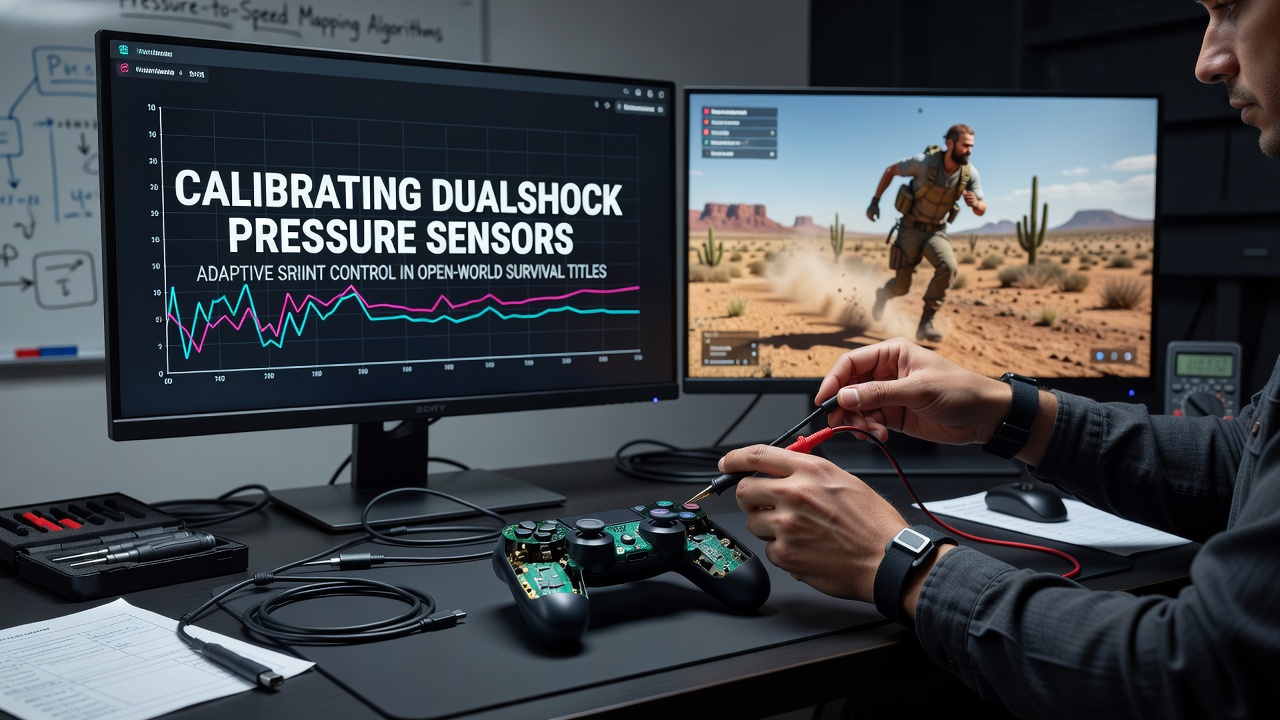
Pressure sensors in DualShock controllers detect varying levels of force applied to buttons and triggers, which allows game engines to interpret input intensity for mechanics like sprinting in open-world survival games. Developers map these analog readings to character movement speeds, where light pressure might trigger a walk and firmer presses activate full sprint while stamina drains accordingly. Calibration ensures the sensor range aligns with intended game responses, preventing issues like unintended walking when full sprint is needed or rapid fatigue from overly sensitive triggers.
Understanding Sensor Mechanics in DualShock Hardware
DualShock controllers incorporate resistive sensors beneath the L2 and R2 triggers along with select face buttons, and these components convert physical pressure into voltage changes that the console reads as continuous values rather than simple on-off states. Manufacturers test these sensors during production to establish baseline resistance curves, yet individual units vary due to manufacturing tolerances and wear over time. Game studios therefore provide in-game calibration tools or rely on system-level firmware adjustments to fine-tune how raw sensor data translates into sprint commands within survival titles set in expansive environments.
Engineers at hardware firms document that sensor drift occurs after repeated use, which shifts the zero point and maximum pressure thresholds, and this drift directly impacts adaptive sprint systems that scale speed based on applied force. Studies from university labs in Europe have examined similar resistive sensor behaviors across consumer electronics, revealing consistent patterns of degradation after thousands of cycles. Calibration routines typically involve holding the controller in neutral positions, applying known weights to triggers, and recording output values to create custom lookup tables that games reference during runtime.
Calibration Procedures for Game Integration
Calibration begins with connecting the controller to diagnostic software that reads sensor voltages at multiple pressure points, after which technicians plot these values against expected game inputs like partial sprint for cautious movement through dangerous areas. Open-world survival titles often feature stamina mechanics tied to sprint intensity, so accurate mapping prevents players from exhausting resources faster than intended when crossing procedurally generated terrains. Software updates in 2025 introduced automated calibration sequences that guide users through a series of presses at different force levels, storing the resulting profiles on the console or cloud account for seamless transfer across sessions.
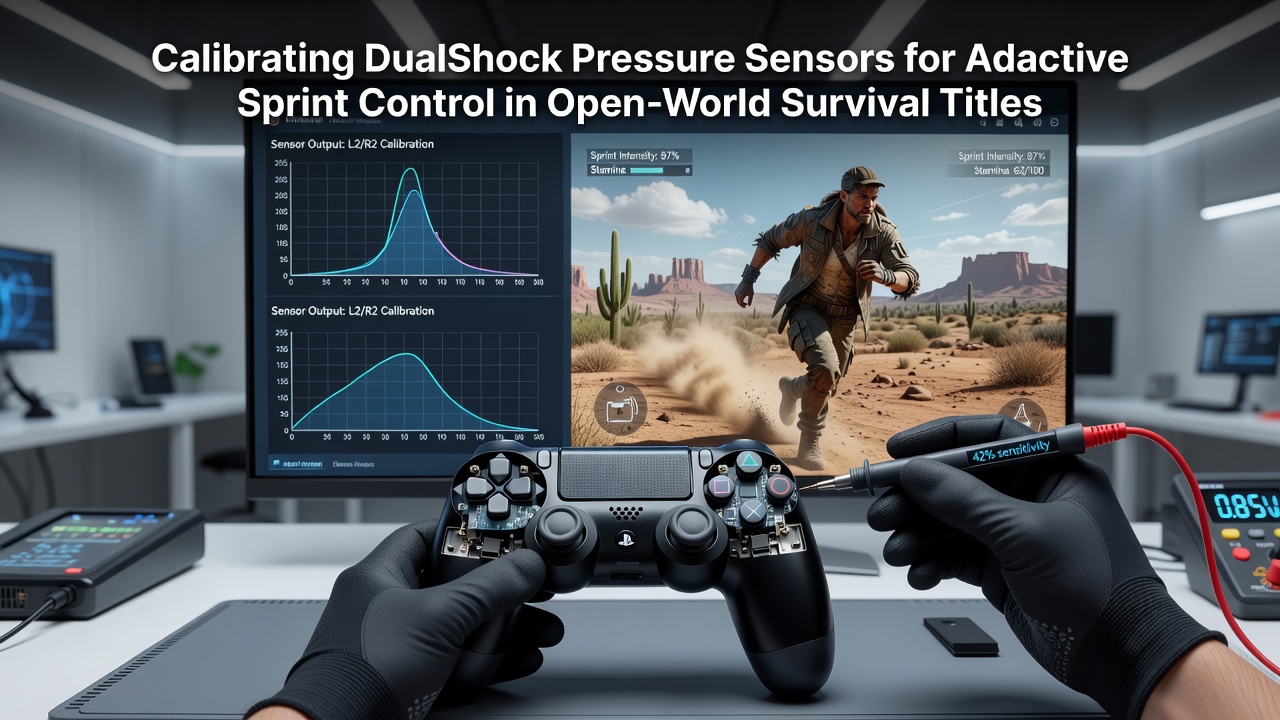
Developers integrate these calibrated profiles into the game's input system by scaling sensor output against character animation blends, which means a mid-range pressure value might produce 60 percent sprint speed while preserving enough stamina for sudden combat transitions. Research conducted at technical institutes in Canada has measured how precise calibration reduces input latency by up to 15 milliseconds in controller-to-engine pipelines, allowing survival mechanics such as quick evasions during resource gathering sequences to feel more responsive. Teams working on titles released after 2024 routinely include options to reset calibration data when hardware changes occur, such as after controller repairs or battery replacements that affect sensor seating.
Applications in Open-World Survival Design
Adaptive sprint control powered by calibrated pressure sensors lets players modulate speed while navigating vast maps filled with threats and limited resources, where holding a trigger at varying depths determines whether the character jogs quietly past enemies or commits to a full run that risks detection. Survival systems track stamina depletion rates tied to these pressure levels, and accurate sensor data ensures depletion curves match player intent across different terrain types like mud, snow, or uneven rocks. Industry reports from the Entertainment Software Association note increased adoption of analog input schemes in survival genres since 2023, correlating with higher player retention metrics in titles that reward nuanced movement control.
One studio implemented dynamic calibration checks that run silently during loading screens, comparing current sensor readings against stored baselines and prompting adjustments only when deviations exceed predefined tolerances. This approach maintains consistency for long play sessions where players alternate between stealth approaches and urgent sprints to escape environmental hazards. Data from performance tracking tools shows that games using such systems report fewer instances of unintended stamina exhaustion compared to binary button-based sprint mechanics.
Technical Considerations and Firmware Updates
Firmware revisions released around June 2026 expanded support for custom pressure curves on DualShock models, enabling survival game developers to define multiple sprint tiers that respond to sensor granularity without requiring additional hardware modifications. These updates address compatibility across regional hardware variants by standardizing calibration protocols that account for voltage differences in power supplies used in various markets. Engineers emphasize testing calibration stability under temperature fluctuations common during extended gameplay, since heat can temporarily alter resistive sensor outputs and affect sprint responsiveness in outdoor survival scenarios.
Integration with accessibility features allows remapping pressure sensitivity ranges for players with varying grip strength, yet core survival mechanics remain balanced by preserving the underlying stamina economy regardless of calibration settings. Academic papers presented at international game technology conferences have analyzed input accuracy improvements from sensor calibration, documenting reduced error rates in movement execution across multiple controller units tested in controlled environments.
Conclusion
Calibration of DualShock pressure sensors establishes reliable connections between physical input and adaptive sprint behaviors in open-world survival games, supporting consistent stamina management and responsive navigation through complex environments. Ongoing firmware refinements and integration standards continue to refine how these sensors contribute to gameplay precision as development practices evolve.