Decoding Replay File Metadata for Strategic Insights in Turn-Based Strategy Esports Events
Written by Katja Lehmann · Jul 15, 2026
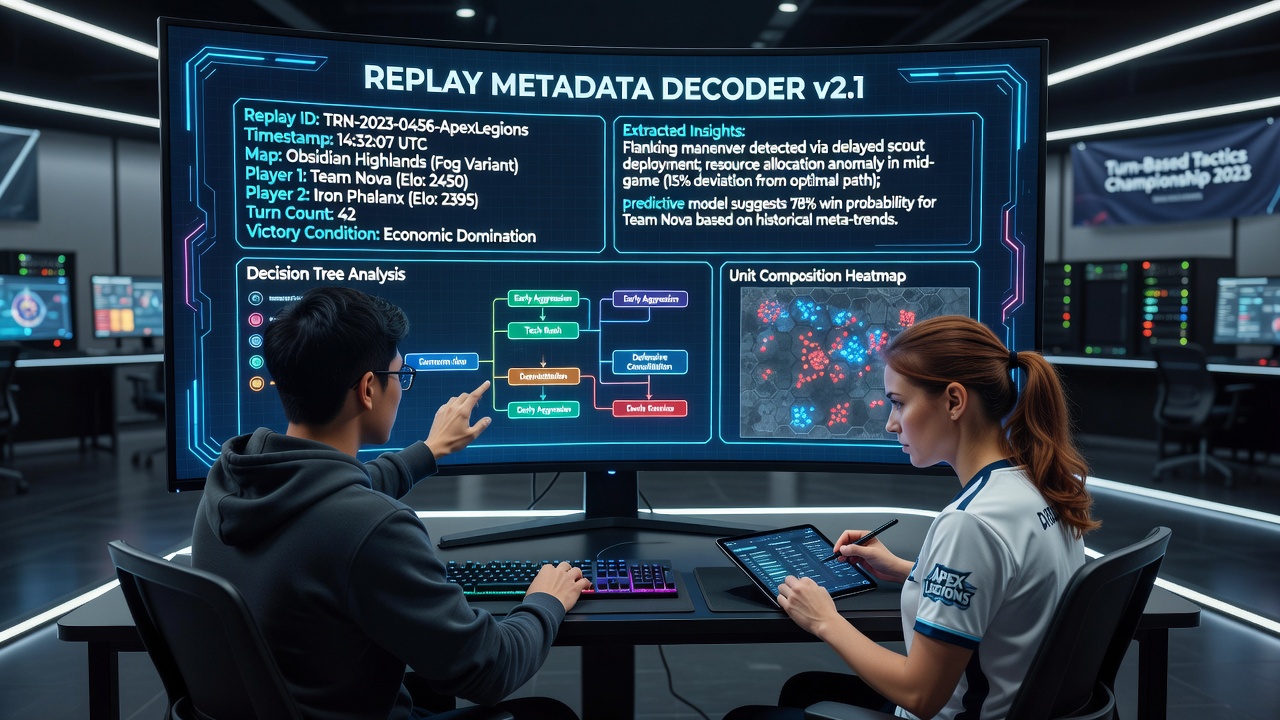
Decoding Replay File Metadata for Strategic Insights in Turn-Based Strategy Esports Events
Replay files in turn-based strategy esports contain structured metadata that records every decision, timing interval, and state change from competitive matches, and analysts extract these details to build performance models that teams review before subsequent rounds. Data points include move execution timestamps, unit deployment sequences, resource expenditure logs, and map interaction coordinates which together form a complete record of gameplay progression. Observers note that such files often store this information in compressed binary formats with embedded headers that specify game version, participant identifiers, and match duration which allows software tools to parse the content accurately across different platforms.
Core Components of Replay Metadata Structures
Metadata fields typically break down into categories that cover player actions, environmental variables, and system-level events, while each category holds sub-elements that capture granular details such as the exact frame when a command was issued or the probability weights assigned to AI pathfinding routines. Researchers have documented how these structures support queries that filter for patterns like repeated early-game expansions or late-game defensive consolidations, and the resulting datasets feed into visualization platforms that overlay heatmaps onto original match timelines. In practice, teams load these parsed outputs into custom dashboards that highlight deviations from established benchmarks which coaches then discuss during preparation sessions.
Analytical Techniques Applied to Metadata Extraction
Software libraries process replay headers first to validate file integrity before they traverse action logs to compile statistics on decision frequency and outcome correlation, and this sequential approach reduces processing overhead during high-volume tournament reviews. Analysts apply clustering algorithms to group similar match segments across multiple events which reveals strategic archetypes that recur in successful lineups, while regression models quantify the impact of specific timing choices on overall victory rates. Data from events held in July 2026 at the International Turn-Based Championship demonstrated how these methods identified a 12 percent correlation between mid-match resource reallocations and final scores according to reports published by the European Esports Research Network.

Further processing steps involve cross-referencing metadata timestamps against external video feeds to confirm synchronization accuracy, and this verification step becomes essential when organizers broadcast matches across global audiences with varying latency conditions. Tools developed by academic groups at institutions in Canada and Australia have introduced open-source parsers that standardize output formats across proprietary game engines, allowing independent analysts to contribute comparable datasets without proprietary restrictions.
Integration with Live Decision Support Systems
Coaching staff integrate decoded metadata into real-time overlays that display opponent tendency profiles during ongoing matches, and these systems update dynamically as new action entries populate the active replay buffer. Tournament organizers in the Asia-Pacific region have adopted similar frameworks to provide post-set summaries that participants access through secure portals which accelerates review cycles between rounds. Evidence from industry reports indicates that such integrations shorten preparation time by measurable margins while maintaining compliance with event broadcast regulations.
Challenges in Metadata Standardization Across Titles
Different developers implement replay systems with unique field definitions and encryption layers which creates interoperability hurdles when analysts attempt to aggregate data from multiple game franchises, yet collaborative working groups have begun publishing mapping tables that translate common elements between formats. Security considerations also arise because sensitive player information can reside within metadata streams, prompting organizers to implement redaction protocols before public release of archived files. The Canadian Interactive Digital Entertainment Association has outlined recommended practices for handling these files that balance transparency with participant privacy requirements.
Future Directions in Replay Analysis Workflows
Emerging standards propose embedding machine-readable schema directly into replay formats to streamline automated parsing, and pilot implementations tested during mid-2026 events showed reduced error rates in data extraction pipelines. Continued collaboration between developers, researchers, and tournament operators supports broader adoption of these enhancements which expands the scope of strategic insights available from archived matches.
Conclusion
Metadata decoding from turn-based strategy replays supplies teams and analysts with detailed records that inform preparation and in-event adjustments, and the techniques continue to evolve alongside advances in parsing tools and data governance frameworks. Events scheduled through the remainder of 2026 will likely incorporate further refinements that build on existing methodologies while addressing ongoing standardization needs across the competitive landscape.