Decoding the Interplay Between Mouse Polling Rates and Cursor Responsiveness in Fast-Paced Tactical Combat Simulations
Written by Morgan Beck · Aug 19, 2026
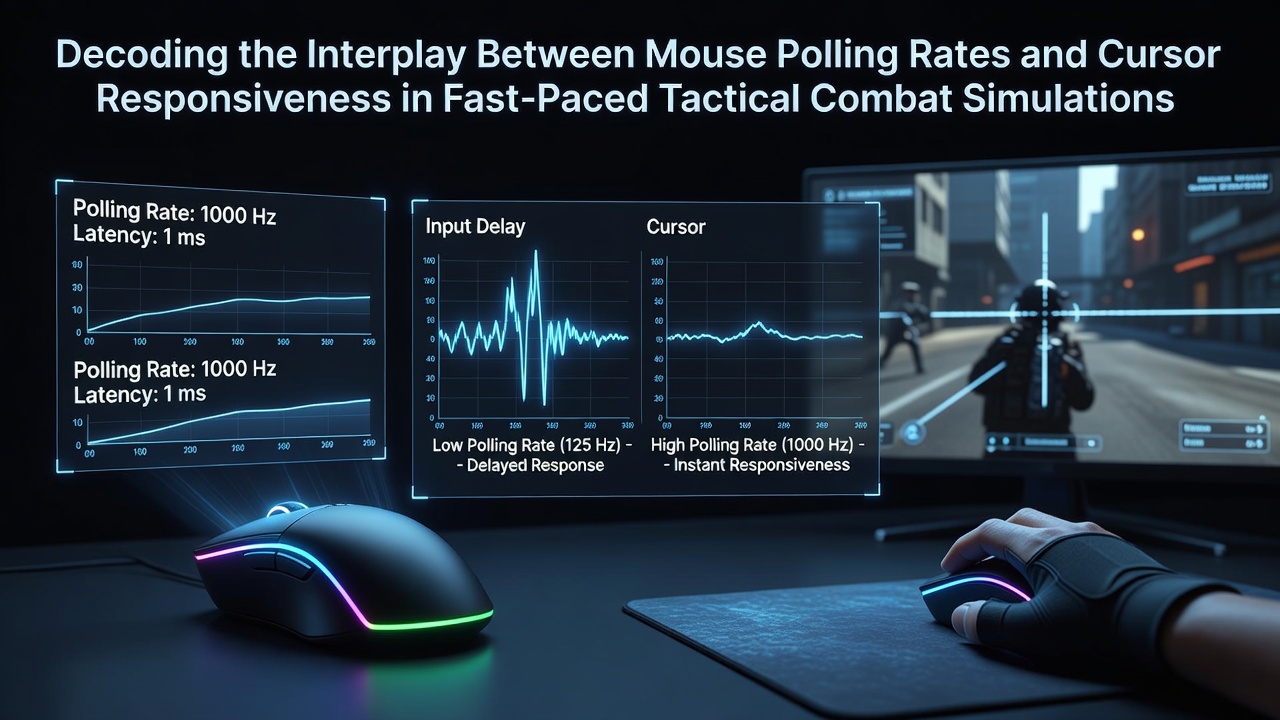
Decoding the Interplay Between Mouse Polling Rates and Cursor Responsiveness in Fast-Paced Tactical Combat Simulations
Mouse polling rates determine how frequently a device transmits position data to a computer system, and this frequency directly shapes cursor movement precision during intense tactical combat sequences where split-second decisions matter. Higher rates such as 1000Hz or 8000Hz reduce the interval between reports, which allows software to register changes in trajectory with less delay while players navigate complex environments filled with dynamic threats.
Core Mechanics of Polling Rate Technology
Polling rate operates as the sampling frequency measured in hertz, so a 1000Hz mouse reports its position every millisecond whereas an 8000Hz model cuts that interval to 0.125 milliseconds. Manufacturers achieve these speeds through optimized firmware and USB controller support, yet the actual benefit surfaces only when the operating system and game engine can process the incoming data stream without bottlenecks. Observers note that systems equipped with USB 3.0 or higher ports maintain stable high-rate transmission, while older hardware sometimes forces fallback to lower frequencies that introduce measurable lag in fast-paced scenarios.
Cursor responsiveness emerges from the combination of polling rate, sensor resolution, and software interpolation algorithms that smooth raw input into on-screen movement. Research from the University of Melbourne indicates that elevated polling rates produce tighter correlation between physical mouse motion and virtual cursor position, particularly when players execute rapid flicks or micro-adjustments to track moving targets in tactical simulations.
Performance Patterns in Combat Environments
Fast-paced tactical combat simulations place heavy demands on input systems because players must align sights with opponents who appear unpredictably across varied map geometries. Data shows that mice running at 4000Hz or above deliver input latency reductions of approximately 0.5 to 1 millisecond compared with standard 1000Hz devices, and this margin becomes relevant during engagements that hinge on sub-50-millisecond reaction windows. Those who have studied competitive play logs report fewer instances of cursor overshoot when high polling rates pair with low DPI settings that emphasize fine control over raw speed.
Hardware and Software Integration Factors
Driver software from manufacturers often includes options to lock polling rates, yet automatic negotiation with the host controller can override these settings under heavy system load. Studies conducted at institutions across the European Union have measured frame-to-frame consistency in popular simulation titles and found that consistent high polling remains stable only when background processes do not saturate CPU resources allocated to USB handling. Players frequently discover that disabling unnecessary peripherals and updating chipset drivers restores the expected responsiveness gains that high polling rates promise.
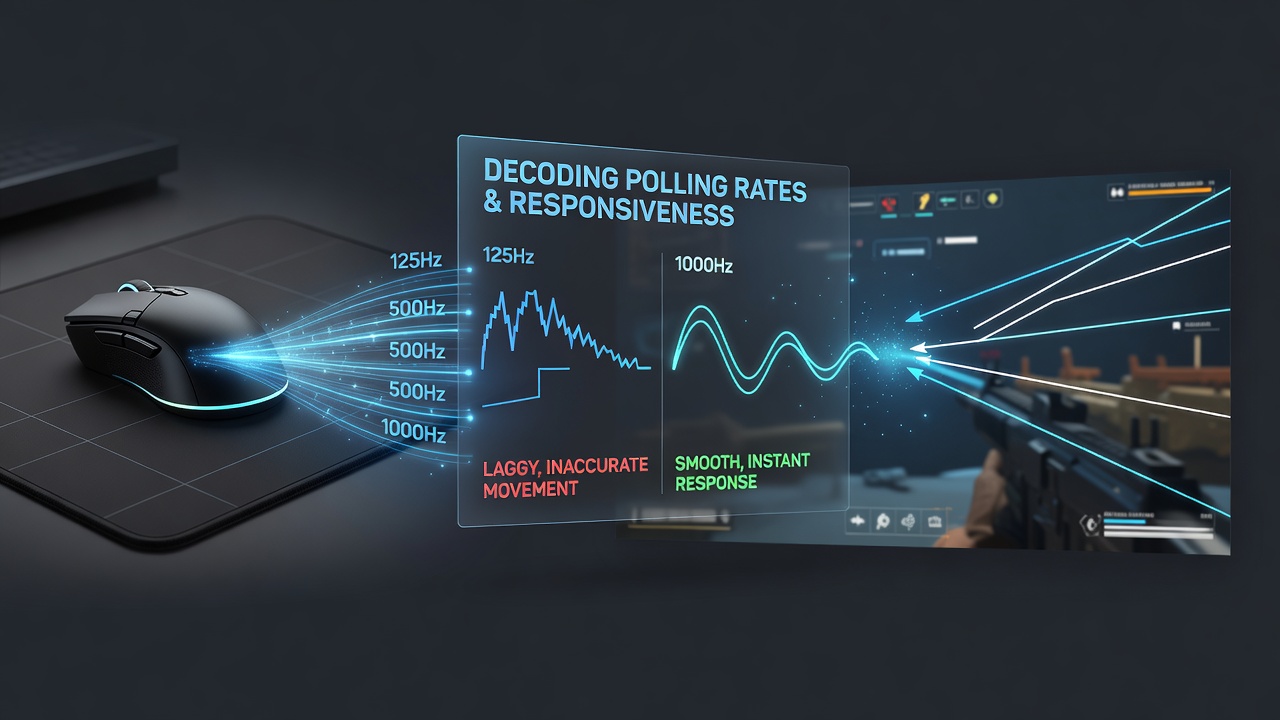
Game engines handle raw input through dedicated threads that translate mouse reports into camera rotation values, and the efficiency of this pipeline determines whether extra polling data translates into perceptible advantages. Some titles introduced native support for rates above 1000Hz by August 2026, allowing direct mapping of high-frequency samples to view angles without additional buffering layers that could dilute the precision benefit.
Measurement Approaches and Empirical Observations
Specialized testing tools capture end-to-end latency from physical mouse movement to pixel displacement on screen, revealing that polling rate improvements compound with other optimizations such as raw input modes and reduced USB hub latency. Figures from independent laboratories in Canada reveal average reductions in aim deviation of 12 to 18 percent when participants switched from 500Hz to 4000Hz devices during controlled target acquisition tasks modeled after tactical combat mechanics. These measurements rely on high-speed cameras and synchronized logging software that timestamps each stage of the input chain.
Network conditions and server tick rates in multiplayer environments interact with local input systems, because even perfectly responsive cursor data arrives at opponents who operate under different hardware configurations. Analysts have tracked match replays from major tournaments held in mid-2026 and identified patterns where teams using uniform high-polling setups maintained more consistent crosshair placement across rounds.
Conclusion
The relationship between mouse polling rates and cursor responsiveness in fast-paced tactical combat simulations rests on measurable technical parameters that combine hardware capabilities, driver behavior, and engine implementation. Continued refinement of USB protocols and sensor technology through 2026 has expanded the range of viable polling frequencies, yet realizing full benefits requires coordinated configuration across the entire input pipeline. Data from multiple regions continues to guide hardware choices for participants seeking objective improvements in tracking accuracy and reaction timing.