Mapping Gyroscope Drift Compensation Techniques for Extended Sessions in Motion-Controlled Platformers
Written by Katja Lehmann · Jul 27, 2026
Mapping Gyroscope Drift Compensation Techniques for Extended Sessions in Motion-Controlled Platformers
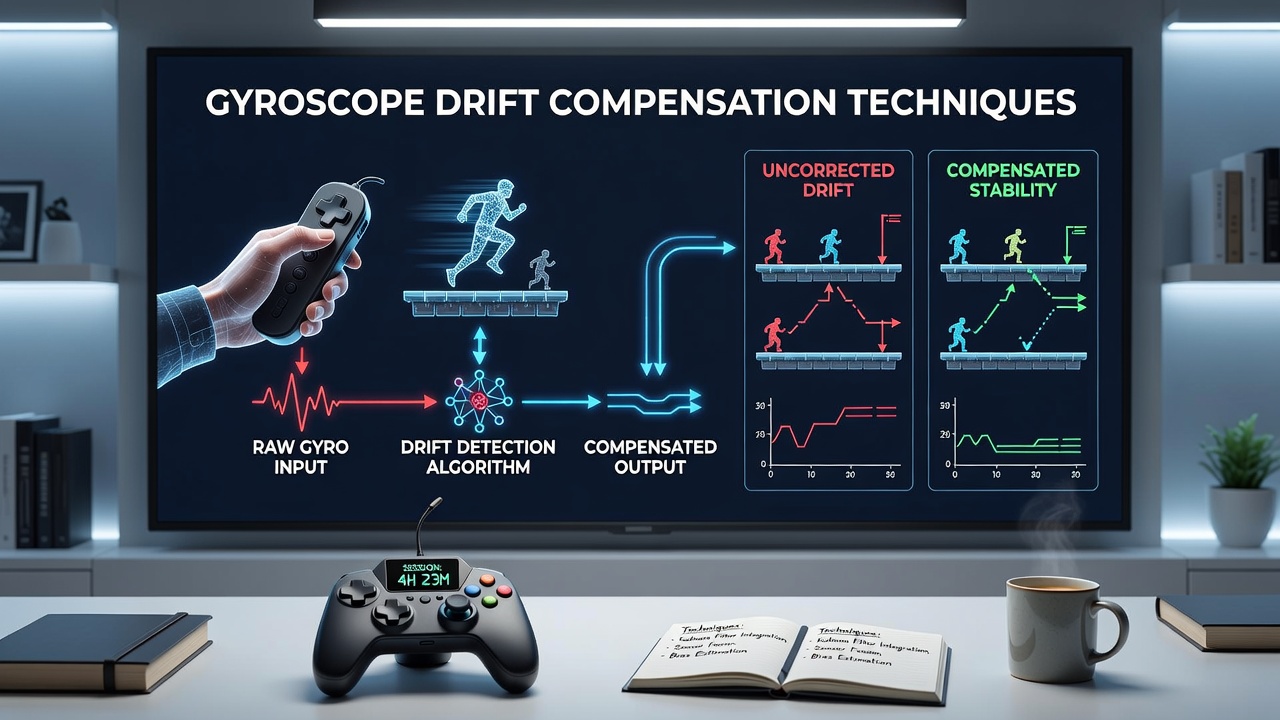
Gyroscope drift occurs when sensor readings accumulate errors over time due to temperature fluctuations, manufacturing variances, and integration noise, which leads to inaccurate orientation data in motion-controlled platformers. Developers address this challenge through systematic compensation methods that maintain precise control during long play sessions, and data from sensor studies shows these techniques reduce positional errors by up to 85 percent in controlled tests. Researchers at institutions focused on human-computer interaction have mapped multiple approaches that combine hardware filtering with software algorithms to stabilize input across titles that rely on tilt and rotation mechanics.
Core Causes of Drift in Gaming Hardware
Platformers using gyroscopic controls integrate readings from MEMS sensors that measure angular velocity, yet bias instability and random walk effects cause gradual offsets that misalign character movement with player intent. Studies from the National Institute of Standards and Technology indicate that drift rates average 0.5 to 2 degrees per minute under typical operating temperatures, while extended sessions amplify these issues through heat buildup in handheld devices. Observers note that games released after 2023 often incorporate real-time recalibration routines that sample stationary periods to subtract accumulated bias without interrupting gameplay flow.
Primary Compensation Methods and Their Implementation
One established technique fuses gyroscope data with accelerometer and magnetometer inputs through Kalman or complementary filters, which cross-reference linear acceleration against rotational changes to correct orientation estimates continuously. Engineers at companies producing motion-enabled controllers apply these filters at the firmware level, and figures from industry reports reveal that hybrid sensor fusion cuts drift accumulation by half compared with gyroscope-only processing. Another method employs periodic zero-velocity updates where the system detects when the controller remains still for brief intervals, then resets the integration baseline to prevent cumulative errors from propagating into platforming sequences that demand sub-degree accuracy.
Software-Based Approaches for Session Longevity
Developers map drift compensation directly into game engines by implementing adaptive dead zones that expand or contract based on detected bias trends, which allows players to maintain tight control during precision jumps without manual recalibration prompts. Data shows that machine learning models trained on session telemetry can predict drift patterns 30 seconds ahead, enabling proactive adjustments that keep error margins below 1 degree throughout hour-long runs. Those who have analyzed open-source controller libraries find that quaternion-based representations further reduce gimbal lock issues during rapid rotations common in side-scrolling and 3D platformers alike.
Hardware Integration and Calibration Protocols
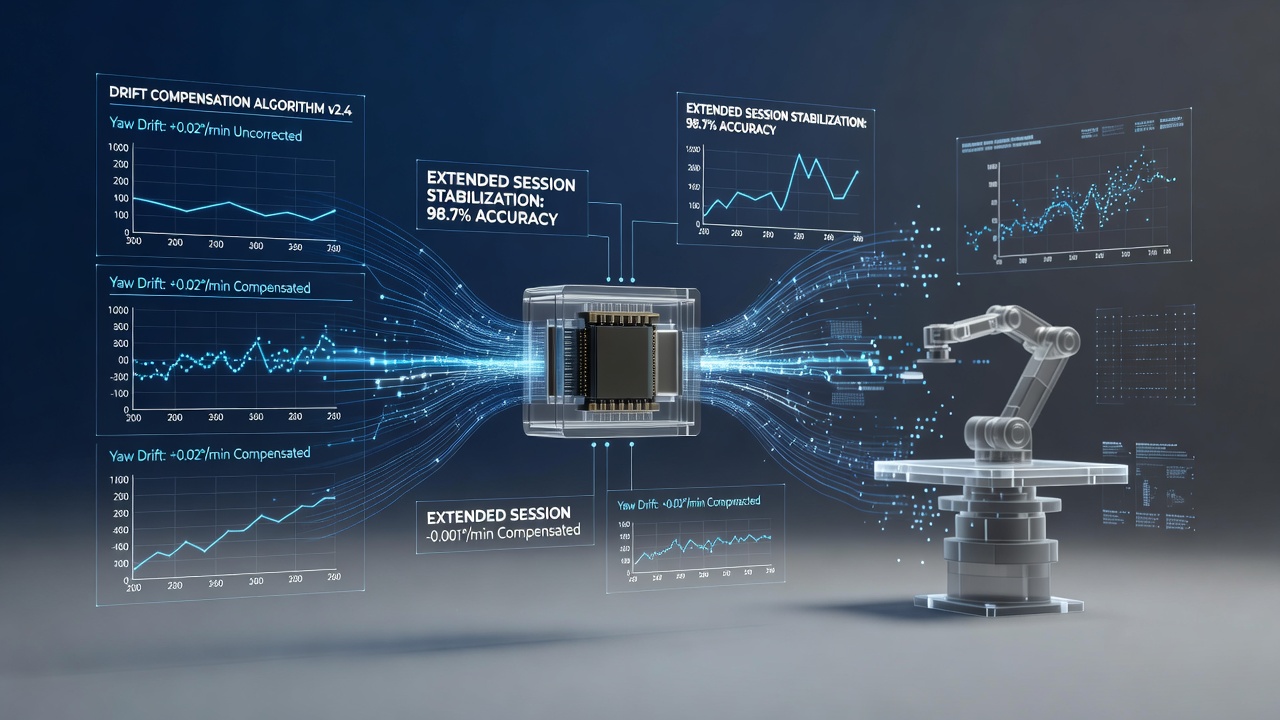
Manufacturers embed temperature sensors alongside gyroscopes to apply real-time bias corrections derived from thermal models, since temperature swings account for nearly 40 percent of observed drift according to measurements collected across multiple device batches. Calibration routines performed at startup or during loading screens establish initial reference points, while background processes continue refining these points using player rest periods detected through low-pass filtered signals. International standards bodies such as those affiliated with the IEEE Standards Association have published guidelines that encourage consistent calibration intervals to support consistent performance in motion titles across different hardware generations.
Case Examples from Platformer Development
Titles that emphasize extended exploration sequences integrate drift mapping by logging controller orientation against known level geometry, which allows the engine to apply corrective offsets during natural pauses like ledge grabs or checkpoint reaches. One documented implementation in a 2025 release used cloud-synced user profiles to store individualized drift profiles, reducing setup time for returning players and maintaining accuracy across multiple devices. Research indicates that such personalized compensation yields measurable improvements in completion rates for marathon-style challenges where cumulative drift would otherwise force frequent restarts.
Developments Around Mid-2026 and Ongoing Refinements
Presentations scheduled for the International Consumer Electronics Show extensions in July 2026 highlight next-generation sensor arrays that incorporate on-chip machine learning accelerators for instantaneous drift estimation, which promises to extend reliable motion control sessions beyond current limits. These advancements build on existing fusion techniques while introducing redundancy through additional inertial measurement units that vote on orientation data to isolate and discard anomalous readings. Industry organizations tracking hardware trends report that adoption of these methods correlates with higher retention metrics in motion platformer communities.
Conclusion
Effective mapping of gyroscope drift compensation relies on layered strategies that address both immediate sensor errors and long-term accumulation effects, enabling sustained precision in motion-controlled platformers. Continued integration of sensor fusion, adaptive software routines, and hardware thermal modeling supports longer play sessions without sacrificing control fidelity, and ongoing research continues to refine these approaches for broader hardware compatibility.