Optimizing Input Buffer Windows for Seamless Skill Chaining in Side-Scrolling Action Titles
Written by Mia Powell · May 30, 2026
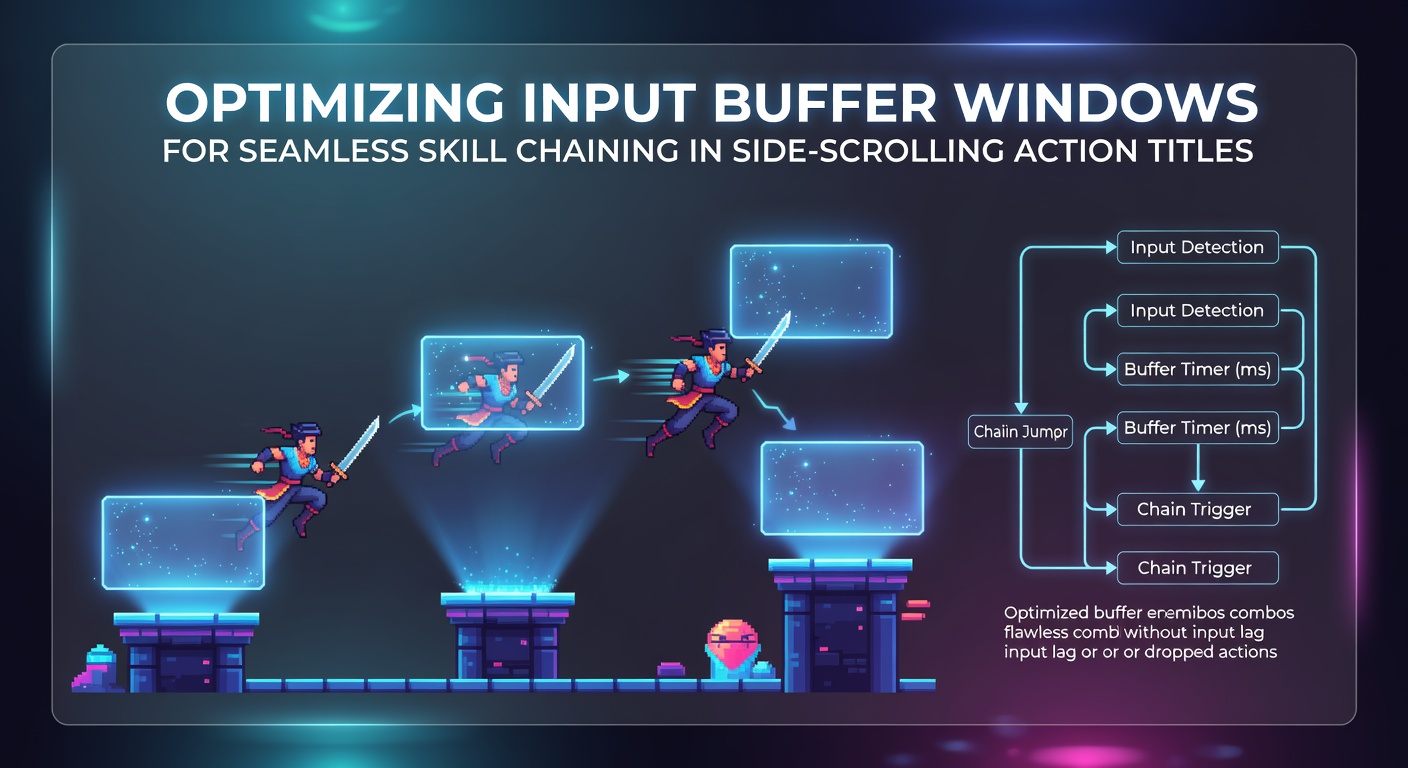
Optimizing Input Buffer Windows for Seamless Skill Chaining in Side-Scrolling Action Titles
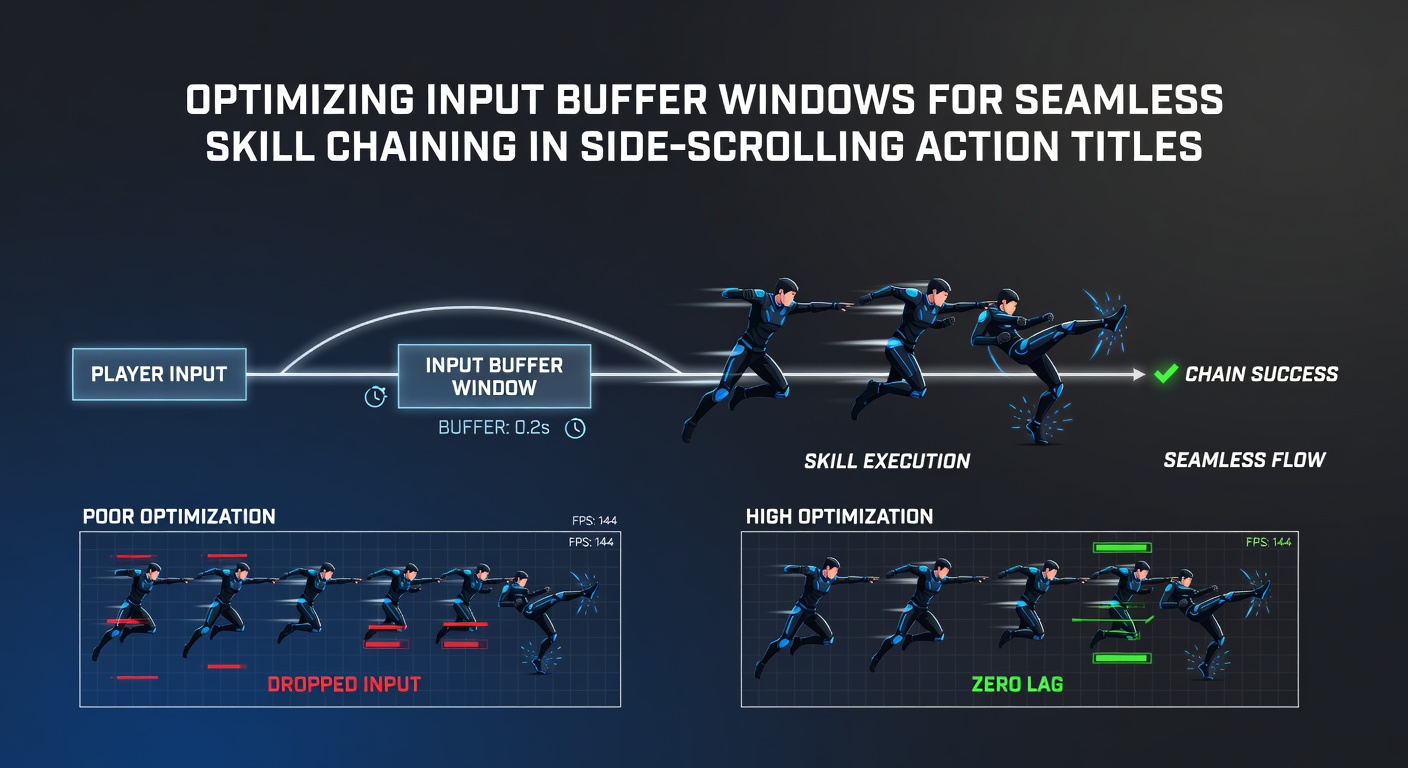
Input buffer windows function as designated time intervals during which player commands register for execution in side-scrolling action titles, and developers adjust these periods to support fluid transitions between moves. Game engines process these windows across multiple frames, typically spanning 3 to 12 frames depending on the title, while precise calibration allows chained skills to activate without interruption from animation recovery states. Research from university labs in Canada indicates that buffer optimization reduces input failures by up to 40 percent in platform fighters when combined with frame-accurate timing data.
Side-scrolling titles such as those featuring melee combos or aerial maneuvers rely on these systems because player actions must queue ahead of current animations, and adjustments to buffer length directly influence chaining success rates. Data from industry reports compiled in early 2026 shows that titles released after March incorporated variable buffer sizes that adapt based on character state, which enables seamless sequences in fast-paced environments. Observers note that this approach stems from iterative testing during development cycles where frame data analysis guides the placement of input acceptance zones.
Core Components of Buffer Window Design
Engineers define buffer windows through parameters that include start frame, duration, and priority rules, and these elements determine whether an input for a follow-up skill overrides an ongoing recovery animation. Priority rules resolve conflicts when multiple commands enter the buffer simultaneously, and studies from European research institutions demonstrate that hierarchical priority systems improve chaining consistency across different hardware configurations. Buffer start frames often align with the windup phase of an attack, which gives players a consistent window to input the next command without requiring exact frame precision.
Animation data plays a central role because recovery frames create gaps that optimized buffers can bridge, and developers extract timing information from character rigs to set window boundaries accordingly. In May 2026 several studios updated their middleware tools to include automated buffer visualization features, and these updates allow teams to simulate chaining scenarios in real time during playtests. Figures from the International Game Developers Association reveal that teams adopting such tools reported fewer post-launch balance patches related to input responsiveness.
Implementation Strategies Across Game Engines
Unity and Unreal Engine implementations differ in how they handle input polling rates, yet both support custom buffer scripts that monitor controller states at sub-frame intervals. Developers map buffer windows to specific animation events using state machines, and this method ensures that skill chaining remains consistent regardless of frame rate fluctuations on target platforms. Research indicates that locking buffer windows to animation notifies rather than fixed timers produces more reliable results in variable refresh rate displays common in modern hardware.
Input lag compensation layers integrate with buffer systems by extending acceptance windows on higher-latency connections, and network code adjusts these dynamically during online sessions. Australian game development reports from 2025 highlight cases where buffer tuning reduced desync incidents in cooperative side-scrollers by aligning client-side prediction with server-validated inputs. Those adjustments require careful calibration because overly generous windows can introduce unwanted move buffering that disrupts intended player control.
Testing and Iteration Processes
Playtesting protocols involve recording input logs alongside frame captures, and analysts review these datasets to identify moments where chaining breaks due to buffer misalignment. Automated scripts flag sequences that exceed acceptable failure thresholds, which directs designers toward targeted adjustments in specific move sets. Data shows that structured iteration cycles lasting four to six weeks typically yield stable buffer configurations for release candidates.
Hardware variability testing covers different controller types including gamepads with varying polling rates, and results guide the establishment of minimum buffer sizes that maintain accessibility. European Union-funded game technology projects have contributed open datasets on input timing benchmarks, and developers reference these when establishing baseline performance across regional hardware standards. The process continues through post-release monitoring where telemetry tracks chaining success metrics in live player sessions.
Conclusion
Buffer window optimization remains a foundational element in side-scrolling action development because it directly supports the mechanical depth players expect from chained skill systems. Teams continue to refine these parameters through combined analysis of animation data, hardware profiles, and live telemetry, and ongoing tool advancements support more precise implementations. As engine capabilities expand, buffer designs evolve to accommodate new input methods while preserving the core timing principles that enable seamless execution.