Pattern Recognition in Enemy Patrol Cycles for Predictive Pathing in Stealth Action Adventures
Written by Morgan Beck · Aug 22, 2026
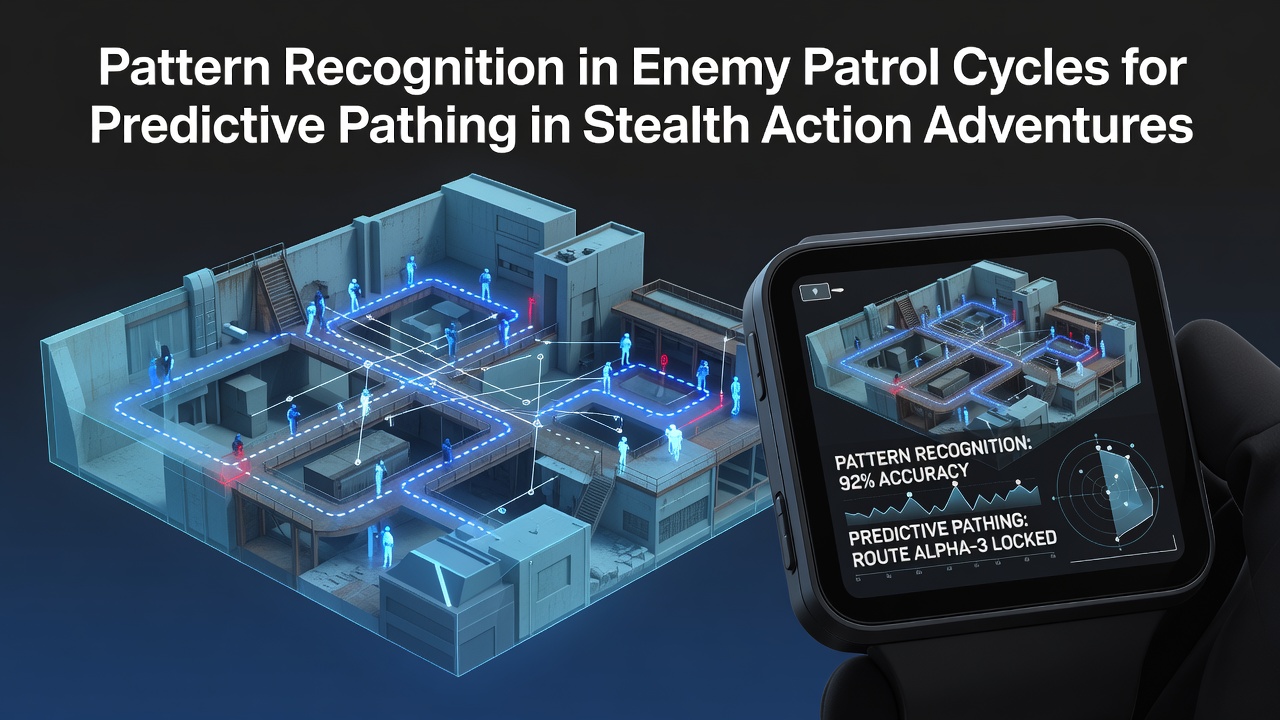
Pattern Recognition in Enemy Patrol Cycles for Predictive Pathing in Stealth Action Adventures
Stealth action adventures rely on enemy patrol cycles that loop through fixed routes at consistent intervals, creating predictable windows for player movement. These cycles typically last between 15 and 45 seconds depending on the title, with guards traversing hallways, courtyards, and interior spaces before returning to start positions. Developers program these paths using waypoint systems that repeat without deviation unless triggered by player detection or scripted events.
Pattern recognition begins with visual and audio observation of guard routes across multiple loops. Players track timing between passes, noting exact moments when sightlines clear or when audio cues such as footsteps fade. In titles like Metal Gear Solid and Splinter Cell series, these cycles incorporate multiple overlapping patrols that intersect at specific points, requiring simultaneous monitoring of two or more entities to identify safe traversal gaps.
Core Mechanics of Patrol Cycle Design
Game engines implement patrol cycles through node-based navigation where each guard follows a sequence of coordinates combined with idle behaviors such as pausing at railings or checking equipment. Data logs from playtesting sessions show that cycles incorporate randomized micro-variations in speed or pause duration to prevent perfect predictability, yet the underlying loop structure remains constant enough for experienced players to map. Research from game AI labs indicates that overlapping cycles create emergent complexity because individual guard timings desynchronize over repeated loops, forming temporary safe corridors that last only a few seconds.
Environmental factors influence cycle effectiveness as well. Lighting changes, moving shadows, and interactive objects like doors or elevators alter guard behavior mid-cycle in certain titles. Observers note that developers adjust cycle speeds in later difficulty settings to compress timing windows, forcing faster decision-making based on previously learned patterns rather than new information.
Techniques for Identifying Repeating Patterns
Players apply systematic observation to break down patrol data into measurable segments. They record the duration each guard spends in each zone, mark the exact frame when a guard turns at a corner, and calculate the interval between consecutive sightings from a fixed vantage point. This data collection often occurs during initial playthroughs where risk remains low, allowing compilation of mental timelines that predict guard positions several seconds ahead.
Multiple overlapping cycles demand layered tracking. One guard might complete a circuit every 22 seconds while another follows a 31-second loop, creating a combined pattern that repeats only after their least common multiple of 682 seconds. Those who study this mechanic discover that noting phase offsets between cycles reveals brief alignment moments when both guards face away from key areas simultaneously.
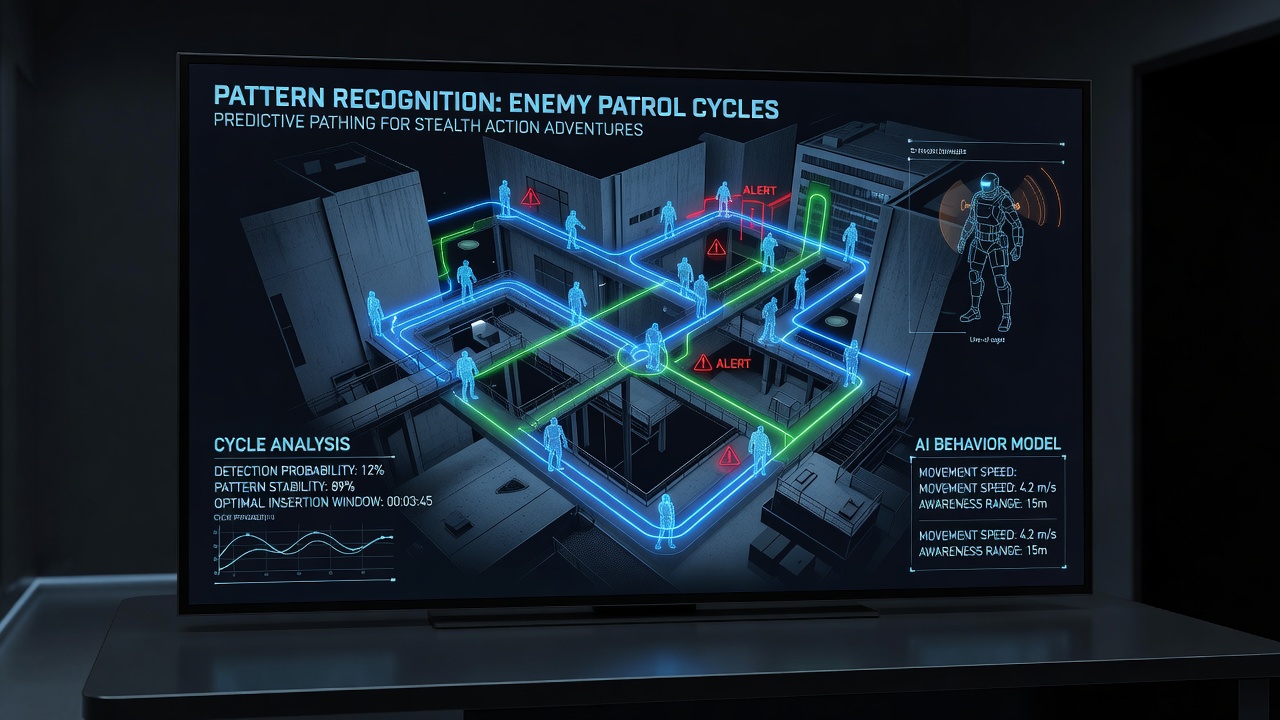
Audio feedback assists pattern confirmation. Footstep rhythms, radio chatter timing, adn equipment clatter provide secondary verification that a cycle has reached a particular stage without requiring direct line of sight. Studies on player behavior indicate that combining audio cues with visual markers reduces errors in path prediction by measurable margins across repeated attempts.
Predictive Pathing Applications in Gameplay
Once patterns become internalized, players execute predictive pathing by moving during projected safe intervals rather than reacting to immediate threats. This approach involves committing to a route based on cycle state observed from a distance, then advancing through multiple zones before the next guard rotation begins. In open facility designs, predictive movement chains together several such intervals to reach objectives while guards remain in fixed positions.
Advanced applications include using cycle knowledge to manipulate guard positions indirectly. Players trigger distant sounds or distractions at precise moments within the cycle to shift a guard onto an alternate path, creating new safe windows that align with the original pattern. Data collected from speedrun communities shows that optimized predictive sequences reduce completion times by exploiting these manipulated alignments.
According to figures from the Entertainment Software Association, stealth mechanics appear in over 18 percent of action-adventure releases tracked between 2023 and 2025, with patrol systems forming a core implementation challenge for developers. European Games Developer Federation reports highlight similar adoption rates across regional studios, noting increased use of modular cycle tools that allow designers to test overlapping patrol interactions during production.
Integration with Modern Game Systems
Contemporary engines incorporate machine learning elements into patrol behaviors, allowing cycles to adapt slightly based on aggregated player data while preserving core loop structures. As of August 2026, several upcoming releases have announced expanded patrol editing suites that let players review recorded cycle data in replay modes, further supporting pattern analysis during practice sessions. These tools display timing graphs and phase offsets directly on screen, translating observed patterns into visual aids that accelerate learning curves for new players.
Networked multiplayer stealth experiences extend these concepts by introducing player-controlled entities that must account for both AI cycles and teammate movements. Predictive calculations become shared tasks where one participant monitors cycle phase while another executes the path, demonstrating coordinated application of pattern data across team roles.
Conclusion
Pattern recognition in enemy patrol cycles remains a foundational skill in stealth action design, supported by consistent cycle structures that reward systematic observation and timing calculation. Predictive pathing emerges directly from this recognition, enabling efficient navigation through environments governed by repeating guard movements. Industry reports and academic tracking continue to document how these mechanics evolve with new engine capabilities, maintaining relevance across successive generations of titles.