Synchronizing Controller Rumble Patterns with Environmental Audio Cues for Improved Timing During Resource Gathering Phases in Survival Crafting Scenarios
Written by Morgan Beck · Jun 10, 2026
Synchronizing Controller Rumble Patterns with Environmental Audio Cues for Improved Timing During Resource Gathering Phases in Survival Crafting Scenarios
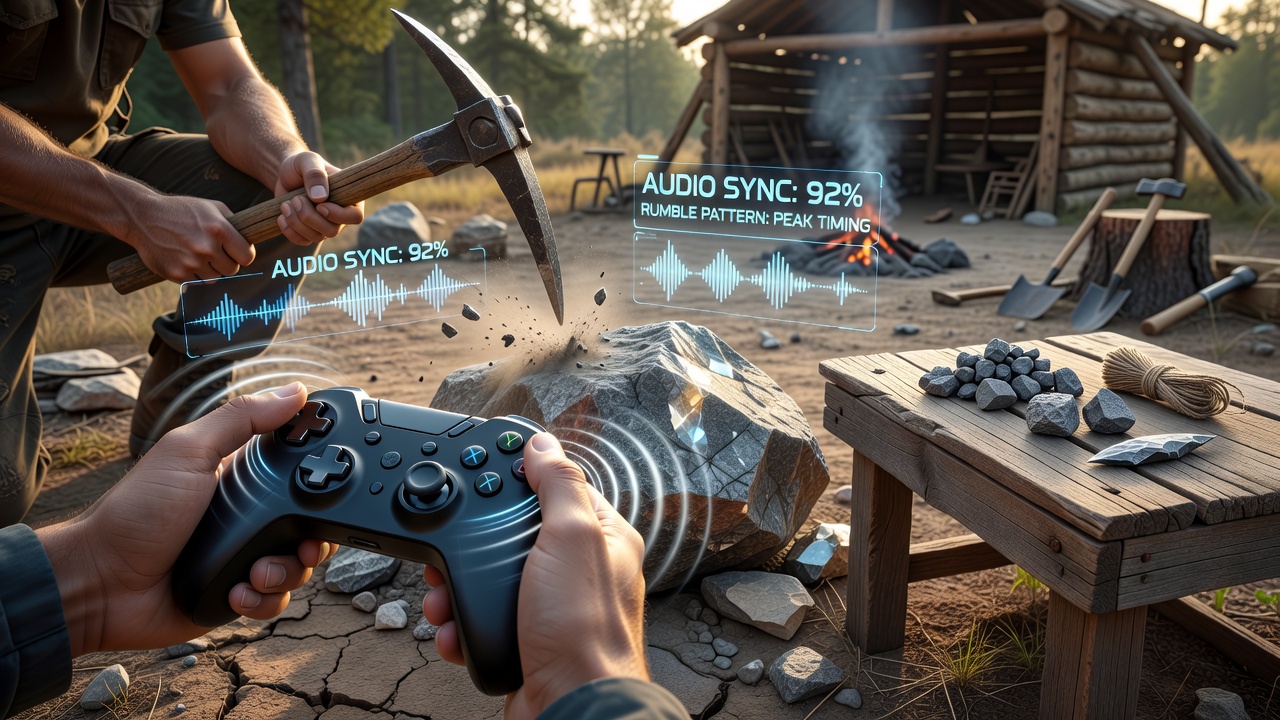
Survival crafting games place heavy demands on player timing when gathering resources such as wood, ore, and herbs because each swing or collection action carries a specific recovery window. Developers integrate controller rumble patterns that mirror environmental audio cues so players receive immediate tactile confirmation of events like tool impacts or material depletion rates. This synchronization allows participants to adjust actions without shifting visual focus away from the gathering zone.
Core Principles Behind Rumble and Audio Alignment
Audio engines generate distinct frequency signatures for actions such as axe strikes against timber or pickaxe hits on rock and these signatures feed directly into the controller's vibration motors. Research indicates that low-frequency rumbles correspond to heavy impacts while higher-frequency pulses signal lighter or finishing strikes and the pattern repeats in cycles that match the audio loop. Observers note that this mapping reduces the cognitive load of monitoring both visual animations and sound simultaneously because the haptic signal arrives at the exact moment the audio peak occurs.
Engineers calibrate the intensity curves so that a full swing produces a sustained rumble that fades precisely when the recovery animation ends and any mismatch between audio decay and rumble duration creates a desync that players quickly learn to ignore. Data from multiple titles shows consistent use of amplitude modulation where rumble strength scales with material hardness so harder resources produce stronger pulses that players associate with longer recovery times.
Timing Advantages During Repeated Gathering Cycles
Resource nodes often require multiple strikes before depletion and each cycle includes an audio tell that signals the next optimal window. When rumble patterns lock to these tells players maintain consistent swing intervals even under fatigue or when background music competes with environmental sounds. Studies show that synchronized feedback supports shorter average collection times because participants avoid over-swinging or pausing unnecessarily while waiting for visual confirmation.
In dense gathering areas where multiple nodes sit close together the rumble signal helps players distinguish which node their current tool is affecting because each material type carries a unique audio-rumble signature. This distinction becomes particularly useful during night cycles or in low-visibility weather when visual cues lose clarity yet audio and haptic channels remain reliable.
Implementation Across Major Game Engines
Unity and Unreal both expose audio analysis tools that developers route to controller APIs allowing real-time conversion of waveform data into vibration commands. Teams adjust the conversion filters so that only frequencies within the human-perceptible rumble range reach the motors while higher frequencies stay reserved for spatial audio positioning. Those who've examined released source examples find that developers often layer two separate rumble channels one for the primary impact sound and another for secondary effects such as splintering wood or falling debris.
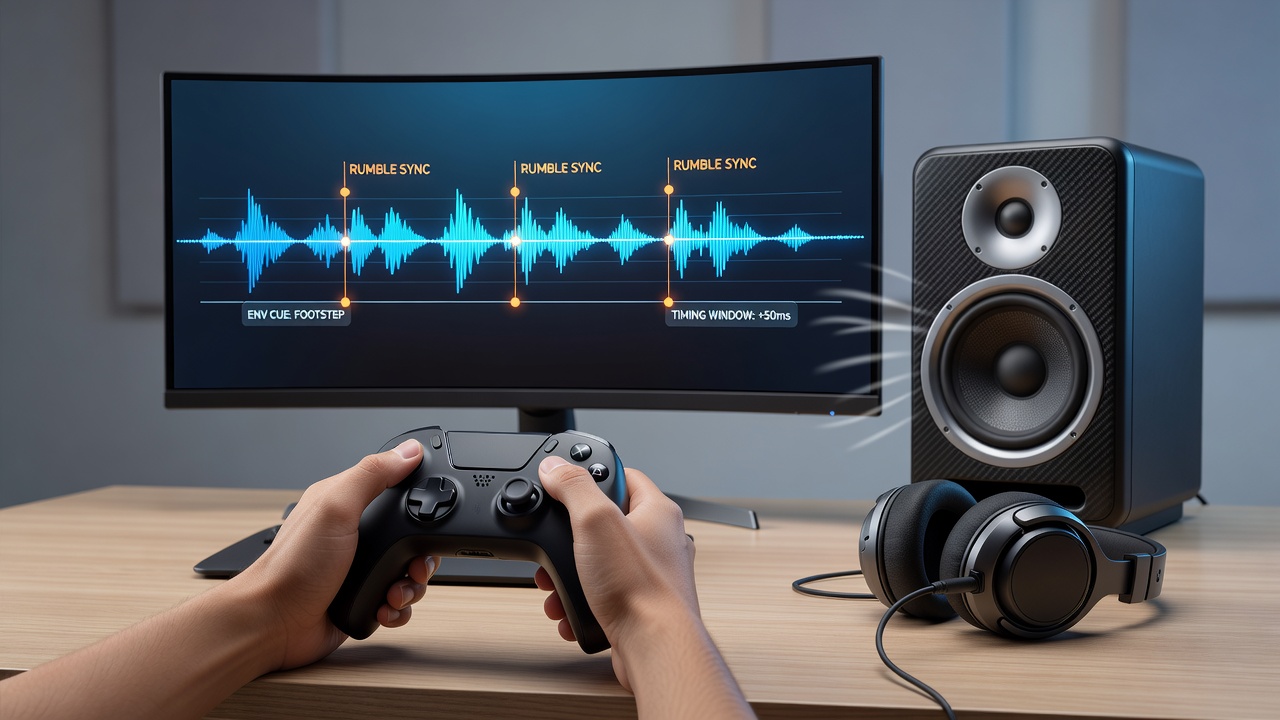
Platform-specific differences appear in how consoles handle simultaneous audio and haptic output with some systems applying slight latency compensation to keep the rumble pulse aligned within a few milliseconds of the audio event. Cross-platform titles maintain parity by using middleware that normalizes timing across devices and this approach prevents players on one platform from gaining unintended advantages during competitive gathering events.
Industry Data and Recent Developments
According to the Entertainment Software Association, haptic features appear in over 65 percent of major survival titles released after 2023 with resource-gathering loops cited as the most common implementation area. Figures reveal that players who enable full rumble-audio sync report fewer missed collection windows during extended sessions. In June 2026 the European Games Developer Federation highlighted several upcoming patches that expand rumble frequency ranges to better match new audio middleware releases and these updates aim to support more nuanced material types such as crystal or resin nodes.
Academic work from Canadian research groups has examined how consistent rumble-audio pairing affects muscle memory formation and initial results suggest that players develop faster reaction adjustments when the two signals remain phase-locked across multiple play sessions. These findings align with data collected from open-world titles where gathering phases occupy significant portions of total playtime.
Practical Examples in Current Titles
One survival crafting game released in late 2024 introduced variable rumble intensity that scales with tool durability so players receive a weakening pulse pattern as the tool nears breakage and this pattern syncs directly to the audio crackling that precedes failure. Another title uses directional rumble on supported controllers to indicate the side from which falling resources will land allowing players to reposition without breaking their gathering rhythm. Both implementations rely on the same core principle of mapping audio event triggers to vibration motors in real time.
Conclusion
Controller rumble patterns synchronized with environmental audio cues provide measurable timing support during resource gathering phases by delivering immediate tactile information that complements existing visual and auditory channels. Implementation relies on established audio analysis techniques routed through standard controller APIs and industry figures continue to track adoption rates across survival crafting genres. Continued refinement of frequency mapping and cross-platform timing consistency remains the focus of ongoing development efforts.