Synchronizing Eye-Tracking Data with Dynamic Difficulty Scaling Algorithms in Narrative-Driven Adventure Experiences
Written by Katja Lehmann · Jun 29, 2026
Synchronizing Eye-Tracking Data with Dynamic Difficulty Scaling Algorithms in Narrative-Driven Adventure Experiences
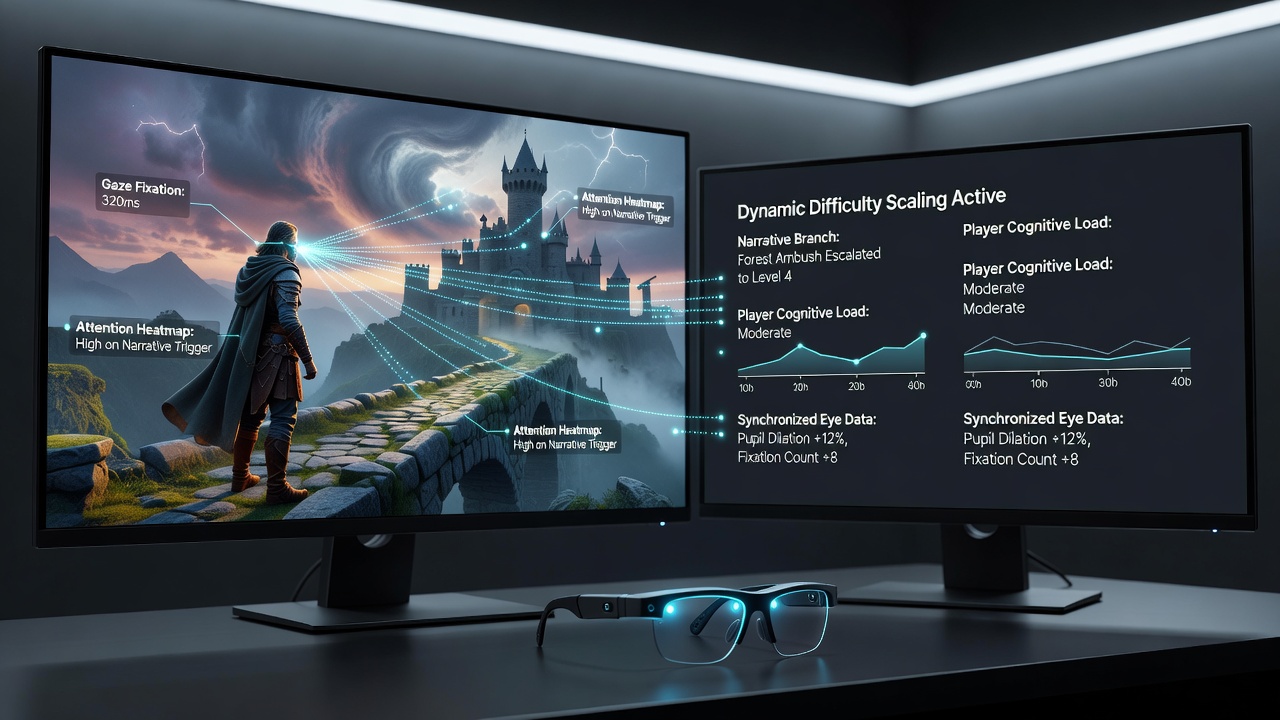
Eye-tracking technology captures precise gaze patterns during gameplay while dynamic difficulty scaling algorithms adjust challenge levels based on performance metrics, and when these systems synchronize they create responsive experiences tailored to individual player attention in narrative-driven adventure titles. Developers integrate hardware like infrared cameras with software that processes fixation points and saccades to inform adjustments in puzzle complexity, enemy behavior, and story pacing. This synchronization relies on real-time data pipelines that feed gaze coordinates into machine learning models trained on engagement indicators such as dwell time on key narrative elements. Researchers have documented how eye-tracking reveals cognitive load through metrics including blink rate and pupil dilation, which dynamic scaling systems then use to modulate parameters like resource availability or dialogue branch depth. Studies from institutions in Canada indicate that combining these inputs reduces player frustration in branching story scenarios by shifting difficulty before explicit failure occurs. The process begins with calibration sequences that establish baseline gaze behavior, after which algorithms compare live data against narrative checkpoints to trigger scaling events.Technical Integration Methods
Software frameworks handle the synchronization through event-driven architectures where gaze events trigger API calls to difficulty modules, and these modules apply weighted adjustments based on predefined thresholds for attention distribution. For instance, prolonged focus on environmental clues might lower the threshold for hint availability while scattered gaze patterns could increase exploration incentives. Hardware compatibility spans consumer headsets and desktop monitors equipped with tracking peripherals, although latency under 20 milliseconds remains essential to maintain immersion without noticeable lag.
Data fusion techniques combine eye metrics with traditional inputs like completion time and health status to produce composite difficulty scores, and this layered approach prevents over-reliance on any single signal. Observers note that narrative adventures benefit particularly because story elements such as character interactions and environmental storytelling provide rich targets for gaze analysis compared to action-heavy genres. Algorithms often employ reinforcement learning to refine scaling rules over multiple play sessions, drawing from aggregated anonymized datasets that highlight common attention patterns across player demographics.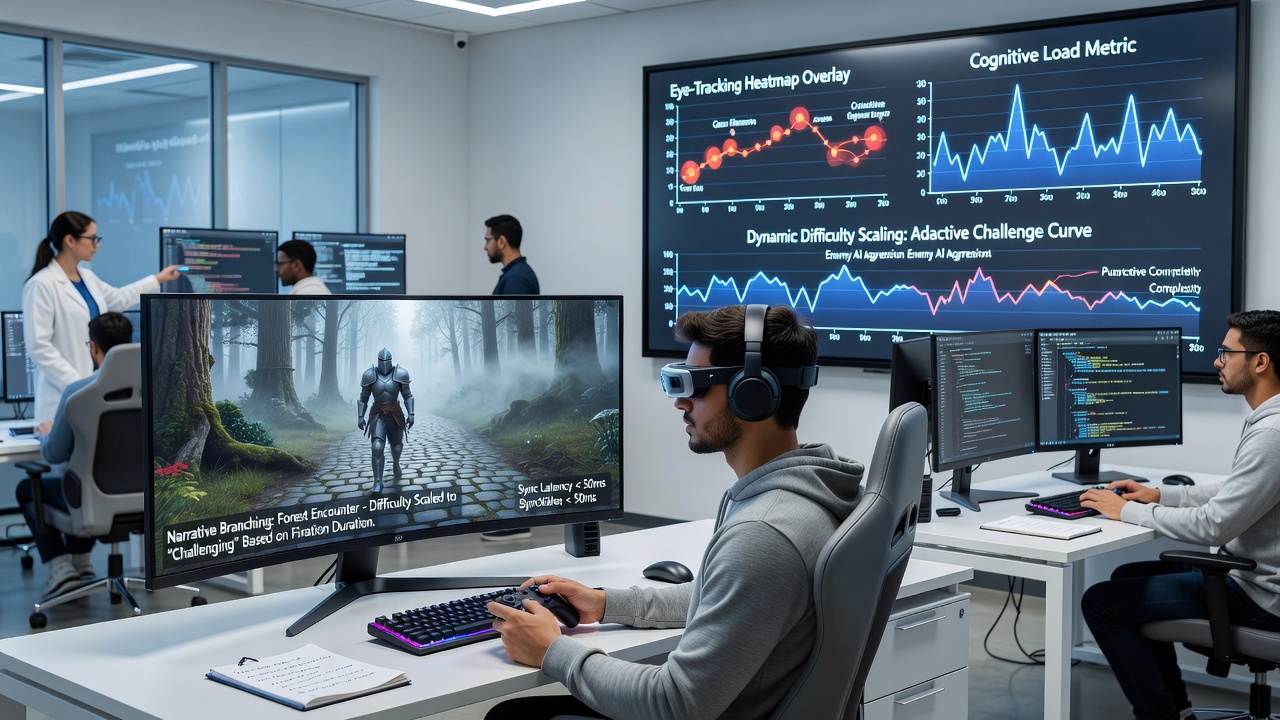
Applications in Story-Focused Design
Game studios apply these synchronized systems to maintain pacing across extended narrative arcs where player investment varies widely. In sequences involving investigation or dialogue, gaze data signals when attention drifts from critical plot points and prompts subtle scaling such as enhanced audio cues or reduced secondary objectives. European research consortia have reported that such adjustments preserve emotional engagement by aligning mechanical difficulty with narrative tension rather than overriding it.
Case examples include titles that scale companion AI responsiveness when players fixate on environmental details, thereby guiding story progression without breaking fourth-wall immersion. Data from industry reports shows adoption rates increasing as eye-tracking hardware becomes standard in more platforms. Synchronization also supports accessibility features by detecting visual search difficulties and adapting text size or contrast dynamically during key story moments.Implementation Challenges and Solutions
Privacy considerations arise because eye-tracking captures biometric information, leading developers to implement on-device processing and user-controlled data retention policies. Technical hurdles include handling variable lighting conditions that affect tracking accuracy and compensating for individual differences in eye physiology through adaptive calibration routines. Solutions involve hybrid models that fall back on behavioral data when gaze signals degrade while still preserving the core synchronization logic.
Industry organizations across the Asia-Pacific region have established guidelines for ethical use of biometric data in entertainment software, emphasizing transparency in how algorithms interpret attention metrics. Testing protocols now incorporate diverse participant groups to validate scaling fairness across cultural and cognitive variations. As of June 2026 updates to open-source libraries have streamlined integration for smaller studios working on narrative adventures, reducing development overhead for custom synchronization modules.Future Developments
Emerging work explores predictive scaling that anticipates attention shifts based on narrative structure analysis combined with historical gaze data from similar player profiles. University-led projects in Australia examine multi-modal fusion with additional sensors to enhance robustness, while maintaining focus on story coherence. These advancements point toward experiences where difficulty evolves organically alongside player interpretation of plot elements rather than reacting solely to performance outcomes.
Conclusion
Synchronization of eye-tracking data with dynamic difficulty scaling delivers measurable improvements in player retention for narrative-driven adventures according to aggregated industry figures. Continued refinement of data pipelines and ethical frameworks supports broader implementation across platforms. Those developing these systems emphasize the value of balancing technological capability with narrative integrity to deliver consistent experiences.