Utilizing Biometric Feedback Loops to Adjust Difficulty Scaling Dynamically in Narrative-Driven Single-Player Campaigns
Written by Katja Lehmann · Jul 20, 2026

Utilizing Biometric Feedback Loops to Adjust Difficulty Scaling Dynamically in Narrative-Driven Single-Player Campaigns
Observers note that biometric feedback loops have emerged as a technical approach for modulating difficulty in single-player narrative campaigns where player engagement metrics drive adjustments without manual intervention. Systems collect physiological signals such as heart rate variability, electrodermal activity, and eye-tracking patterns then feed those signals into algorithms that recalibrate enemy behavior, puzzle complexity, and pacing elements on the fly. Data from multiple development pipelines indicates these loops operate continuously throughout extended play sessions, creating closed circuits between player state and game response. Implementation typically begins with non-invasive wearable sensors or camera-based monitoring that transmits readings to an on-device processing unit. Software then maps those readings to predefined difficulty tiers, raising challenge levels when arousal indicators remain low or easing tension when stress markers spike above baseline thresholds. Researchers at institutions across North America and Europe have documented integration patterns where narrative branches adapt alongside mechanical changes, allowing story events to unfold at rates that align with detected player focus.Core Components of Biometric Integration
Engineers combine several data streams to form reliable feedback loops, and heart rate monitors provide one primary input while galvanic skin response sensors add secondary confirmation of emotional intensity. Eye-tracking modules track fixation duration on key visual elements, enabling the system to detect moments when attention drifts during dialogue-heavy sequences. Studies conducted by teams at the University of Melbourne reveal that combining these signals reduces false positives compared with single-metric approaches, producing smoother transitions between difficulty states.
Algorithms process incoming data through machine learning models trained on aggregated playtest sessions, and those models predict optimal scaling points several seconds ahead of potential player frustration or boredom. The result appears in real-time adjustments such as subtle increases in enemy patrol density or reductions in required input precision during platforming sections. Industry reports from the Entertainment Software Association highlight adoption rates among mid-sized studios working on story-focused titles, with deployment timelines accelerating after hardware standardization efforts completed in early 2025.Application in Narrative Contexts
Narrative-driven campaigns present unique constraints because story beats often depend on sustained emotional investment, and biometric loops help maintain that investment by preventing mechanical spikes from breaking immersion. Designers embed trigger points at major plot junctions where physiological data influences branching outcomes, such as altering ally survival rates or shifting dialogue tone based on detected tension levels. One documented case from a European studio showed that players who exhibited elevated heart rates during chase sequences received extended recovery windows, preserving narrative momentum without explicit checkpoints.
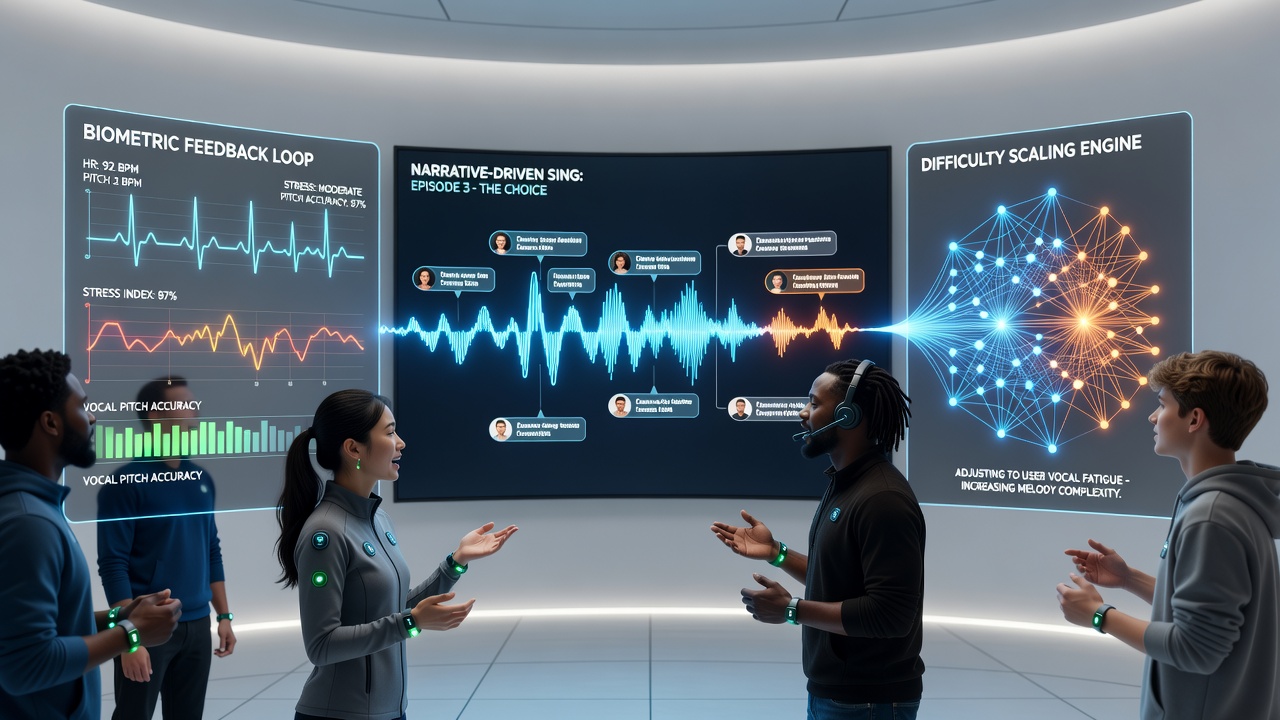 Developers calibrate thresholds individually during initial onboarding sessions, and subsequent playthroughs refine those baselines through ongoing data collection. This personalization layer ensures that difficulty adjustments remain consistent across different player physiologies while still responding to moment-to-moment changes. Figures released by the Interactive Games and Entertainment Association in Australia indicate that titles employing these systems recorded average session lengths extending 18 percent beyond comparable games without biometric scaling during controlled testing periods ending in July 2026.
Technical Challenges and Mitigation Strategies
Latency between sensor input and game response remains a persistent engineering hurdle, and teams address it through predictive buffering techniques that anticipate player state changes based on recent trends rather than instantaneous readings. Signal noise from physical movement or environmental factors can also distort readings, prompting developers to implement multi-sensor fusion methods that cross-reference inputs before triggering adjustments. Academic papers from Canadian research groups describe filtering protocols that isolate game-relevant biometric shifts from external distractions, improving reliability in home environments.
Privacy considerations require transparent data handling practices, and many implementations store only anonymized aggregates after each session rather than retaining raw physiological records. Regulatory frameworks in the European Union have prompted studios to adopt opt-in consent flows that clearly explain how biometric information influences gameplay without storing identifiable profiles long-term.Observed Outcomes Across Deployed Titles
Playtesting data compiled by multiple studios shows measurable increases in completion rates for narrative campaigns that incorporate biometric scaling, particularly among players who previously abandoned titles during high-difficulty segments. Retention metrics improve when systems reduce abrupt difficulty spikes that disrupt story flow, and observers note smoother progression curves in titles released after mid-2025. External validation from university-led studies confirms that players maintain higher average engagement scores when difficulty responds to their physiological signals rather than following fixed schedules.
Conclusion
Biometric feedback loops continue to evolve as hardware becomes more accessible and algorithms grow more sophisticated, and current implementations demonstrate clear technical pathways for dynamic difficulty management in narrative single-player experiences. Ongoing research tracks long-term effects on player retention and emotional engagement across diverse demographic groups, providing additional datasets that inform future refinements. The approach integrates physiological monitoring with narrative design principles to create responsive systems that adjust based on measurable player states rather than static parameters.